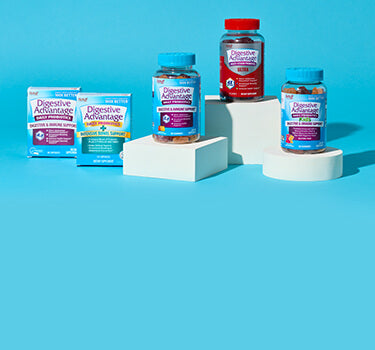
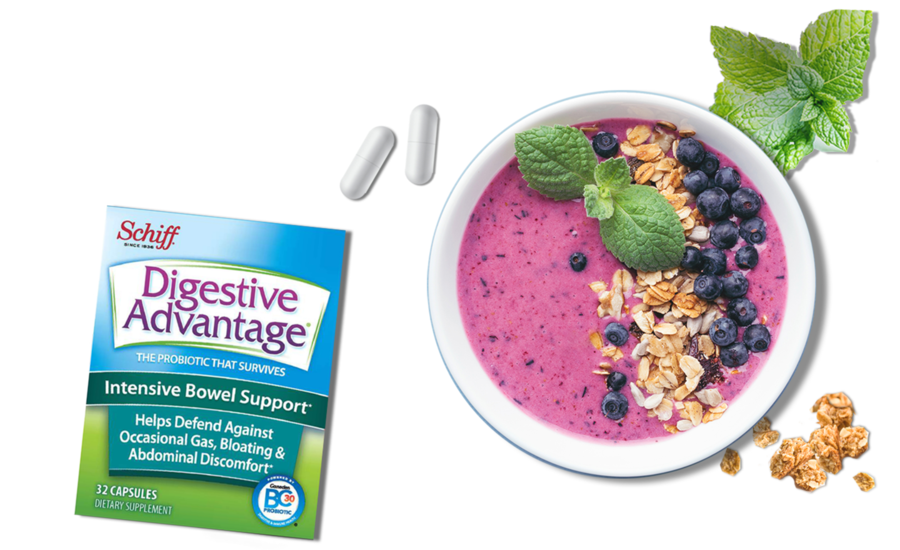
Sustenex™ by Ganeden Biotech is the new all natural daily supplement containing a patented strain of Bacillus coagulans under the branded name, GanedenBC30.
What is Bacillus coagulans?
Bacillus coagulans is a species of beneficial bacteria, or probiotics. As defined by the World Health Organization (WHO), probiotics are live microorganisms, which, when administered in adequate amounts, confer a health benefit on the host. Sustenex contains the specific beneficial probiotic strain,
Bacillus coagulans GBI-30, 6086.
Learn more about probiotics >>
Sustenex is the only widely-available probiotic supplement that contains Bacillus coagulans
Learn more about Sustenex >>
Why Bacillus coagulans is important to your health
Probiotics, or beneficial bacteria such as
Bacillus coagulans, are important to maintaining digestive and immune health. Many factors, including age, travel, a poor diet, stress, antibiotic use and medications can disturb your intestinal balance and decrease levels of beneficial bacteria. Taking a daily probiotic supplement, like Sustenex with GanedenBC
30 (
Bacillus coagulans), can help maintain this delicate intestinal balance, plus enhance your immune system.
According to Ganeden Biotech’s Chief Scientific Officer, “The use of probiotic supplements helps us achieve a balance that we couldn’t otherwise meet through diet alone.”
Learn more about immune and digestive health >>
Benefits of Bacillus coagulans
- SURVIVABILITY Bacillus coagulans survive the manufacturing process and harsh stomach acids to reach the intestinal tract*
- SHELF STABLE Bacillus coagulans requires no refrigeration
- COLONIZATION Bacillus coagulans successfully colonizes the intestines*
- SAFETY 50-plus year history of safe use
- LACTIC ACID PRODUCTION Bacillus coagulans produces the preferred L+ optical isomer of lactic acid*
Bacillus coagulans is a spore-forming bacteria
Spore-forming bacteria can be compared to a seed. When left alone, the seed is dormant – meaning to say it’s not alive, yet it’s not dead either. It’s kept in a state of “readiness” by a protective shell. However, when this seed is put into the right temperature and moisture, it starts to germinate, or grow. A spore-forming bacteria, such as
Bacillus coagulans, works in a very similar way.
Each capsule of Sustenex contains 2 billion cells of Bacillus coagulans
Just as a seed waits for the proper conditions to start growing, so does the spore forming bacteria, Bacillus coagulans. However, for spore-forming bacteria, these conditions are met in the body’s intestinal tract. Here, the spore-forming bacteria meet the right temperature and moisture where they begin to grow and colonize – two critical factors for any probiotic bacteria.
Sustenex contains GanedenBC30 – the trademarked name for Bacillus coagulans GBI-30, 6086
Learn more about GanedenBC30 >>
What makes Bacillus coagulans different from other bacteria?
Bacillus coagulans is surrounded by a natural protective shield. This protective layer helps
Bacillus coagulans survive the heat and pressure of manufacturing and the acids in the stomach in order to arrive alive and intact in the intestines* – their intended target. Other traditional probiotic bacteria, such as bifidobacterium and lactobacillus, do not contain this protective outer shell.
The History Behind Bacillus coagulans
Bacillus coagulans was first isolated in 1932 by Horowitz-Walssowa and Nowotelnow (1) as
Lactobacillus sporogenes and was elaborated in the fifth edition of Bergey's Manual of Determinative Bacteriology. It was initially considered to be a spore-forming Lactobacillus. Furthermore, since
Bacillus coagulans exhibits characteristics typical of both genera Lactobacillus and Bacillus, its taxonomic position between the families Lactobacillaceae and Bacillaceae was often debated. However, in 1939 it was finally transferred to the genus Bacillus and subsequently reclassified as
Bacillus coagulans in the seventh edition of Bergy's. DNA-based technology was used in distinguishing between the two species of bacteria which are morphologically similar and possess similar physiological and biochemical characteristics.
- Bacillus coagulans is a Gram-positive spore-forming rod 0.9u by 3.0u to 5.0u in size, aerobic to microaerophilic.
- On activation of spore formation in the acidic environment of the stomach, Bacillus coagulans can germinate and proliferate in the intestine, producing the favored L (+) optical isomer of lactic acid.
- Bacillus coagulans provides a biotherapeutic platform for several potentially useful applications.
Is Bacillus coagulans the same as Lactobacillus sporogenes?
The short answer: No.
The long answer: Bacillus coagulans is often marketed as
Lactobacillus sporogenes or a “spore forming lactic acid bacterium” probiotic; however this is an outdated name due to taxonomic changes in 1939 as stated above. Although
Bacillus coagulans does produce L+ lactic acid, the bacterium used in these products is not a lactic acid bacterium, as Bacillus species do not belong to the lactic acid bacteria. By definition, lactic acid bacteria such as Lactobacillus and Bifidobacterium do not form spores. Therefore, using the name
“Lactobacillus sporogenes” is scientifically incorrect.