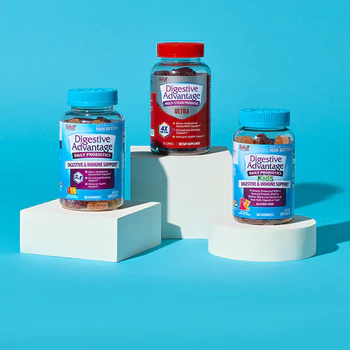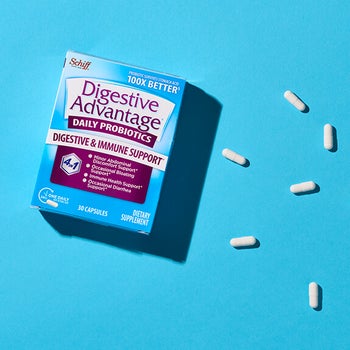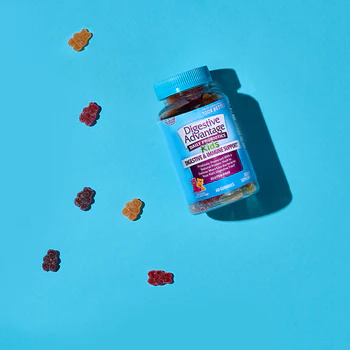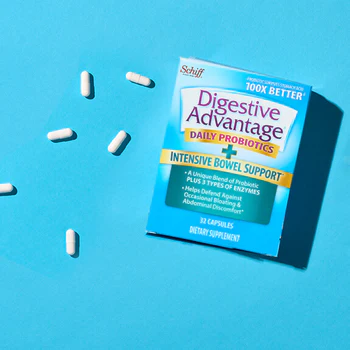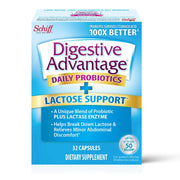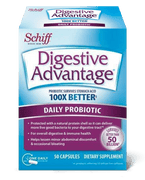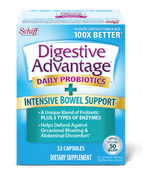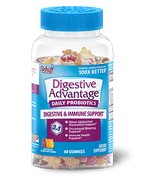
As defined by the World Health Organization (WHO), probiotics are live microorganisms, which, when administered in adequate amounts, confer a health benefit on the host.
Probiotics are beneficial bacteria that live in our digestive tract. Probiotics supplement our body’s natural ecosystem by helping maintain a balance between beneficial bacteria and harmful bacteria.*
Sustenex contains the probiotic GanedenBC30 and helps establish a healthy balance between beneficial and harmful bacteria.*
Learn more about Sustenex Probiotics >>
Why Does Your Digestive System Need Probiotics?
From the day you were born your digestive tract has been introduced to a steady stream of bacteria – some helpful, some harmful. One key to intestinal health is maintaining a balance of helpful bacteria and harmful bacteria, thus avoiding digestive imbalance.*
Unfortunately, many factors (see list below) can disturb your intestinal balance and decrease the level of beneficial bacteria or naturally occurring probiotics (healthy bacteria). There is good news, however. A daily regimen of a probiotic supplement, such as Sustenex, can boost beneficial bacteria levels to help restore intestinal balance.*
Daily use of a probiotic supplement, like Sustenex, can help you maintain digestive health. Learn more >>
Possible factors that can disrupt your digestive balance:
- Poor diet
Today’s poor eating habits can disturb digestive balance. Here are a few tips: limit fats and sweets, add fiber, drink at least 64 oz of fluids daily, eat slowly. - Age
As you age, your levels of healthy bacteria (probiotics) decrease which can disrupt digestive balance. - Changes in Diet
If you make changes in your diet, do it gradually to give your body time to adjust. - Travel
Traveling increases stress and exposes you to different bacteria, most often in water, that can increase your chances of digestive imbalance.
- Stress
Digestive health can be improved by reducing stress.
According to Allan Walker, Director of the Harvard Medical School Division of Nutrition, “Evidence from clinical research demonstrates that adding ‘good’ bacteria to the diet promotes a healthy digestive and immune system.”*
What to Look for in a Probiotic Supplement:
SURVIVABILITY
Probiotic bacteria which arrive in your intestinal tract dead on arrival, regardless of their quantity, are useless. Not only do the probiotic bacteria in Sustenex survive your stomach’s highly acidic environment, they arrive alive in massive numbers. We’re talking hundreds of millions of live probiotic cells.*
COLONIZATION
OK. So the probiotic bacterial cells arrived alive, but if they don’t colonize (i.e. multiply) their entire treacherous journey would be for naught. The probiotic bacterial cells in Sustenex are prolific colonizers. That means, immediately upon arrival the probiotic cells begin the important process of colonizing your intestinal tract.*
LACTIC ACID PRODUCTION
This plays a critical role in the success of a probiotic. Sustenex with GanedenBC30 produces the preferred L+ optical isomer of lactic acid to help support the digestive and immune systems.*
QUANTITY
Each capsule of Sustenex has at least 2 billion probiotic cells at the time of manufacture. The bottom line: Sustenex probiotics arrive alive, colonize and produce lactic acid, all essential factors helping your intestinal and immune system maintain balance.*
Learn more about the probiotic supplement, GanedenBC30 >>
ReferencesHarvard Medical School Division of Nutrition, Proceedings of the Symposium Probiotics and Intestinal Health in Children, Washington, DC, October 9, 2005.
Marteau PR, et al. (2001). Protection from gastrointestinal diseases with the use of probiotics. American Journal of Clinical Nutrition, 73 (Suppl): 430S–436S.
Metchnikoff E. Études sur la flore intestinale. Ann Inst Pasteur Paris, 1908;22:929-95.
Joint Food and Agriculture Association (FAO) World Health Organization (WHO) Expert Consultation on Evaluation of Health and Nutritional Properties of Probiotics in Food Including Powder Milk with Live Lactic Acid Bacteria, October 2001.
FAO/WHO. 2001. Evaluation of Health and Nutritional Properties of Probiotics in Food Including Powder Milk with Live Lactic Acid Bacteria. Food and Agriculture Organization of the United Nations and World Health Organization Expert Consultation Report.